Lizards – those scuttling, wall-climbing creatures – might be harmless, but they can certainly be unwelcome guests in your home. While they play a role in controlling insects, finding them darting across your living room or lurking in the kitchen can be unsettling.
If you're looking for natural, humane, and effective ways to deter these reptilian visitors, you've come to the right place. We've compiled 12 simple home remedies to help you reclaim your space.
Why Do Lizards Come Indoors?
Before we dive into solutions, understanding why lizards might be attracted to your home can help you prevent future infestations.
-
Food Source: Your home might be a buffet for insects like mosquitoes, flies, and cockroaches, which are a lizard's primary diet.
-
Shelter: Lizards seek warm, dark, and secluded spots, especially during colder weather or heavy rain.
-
Water: Leaky pipes or standing water can also attract them.
12 Simple Home Remedies to Get Rid of Lizards
Here are some natural and easy-to-implement solutions:
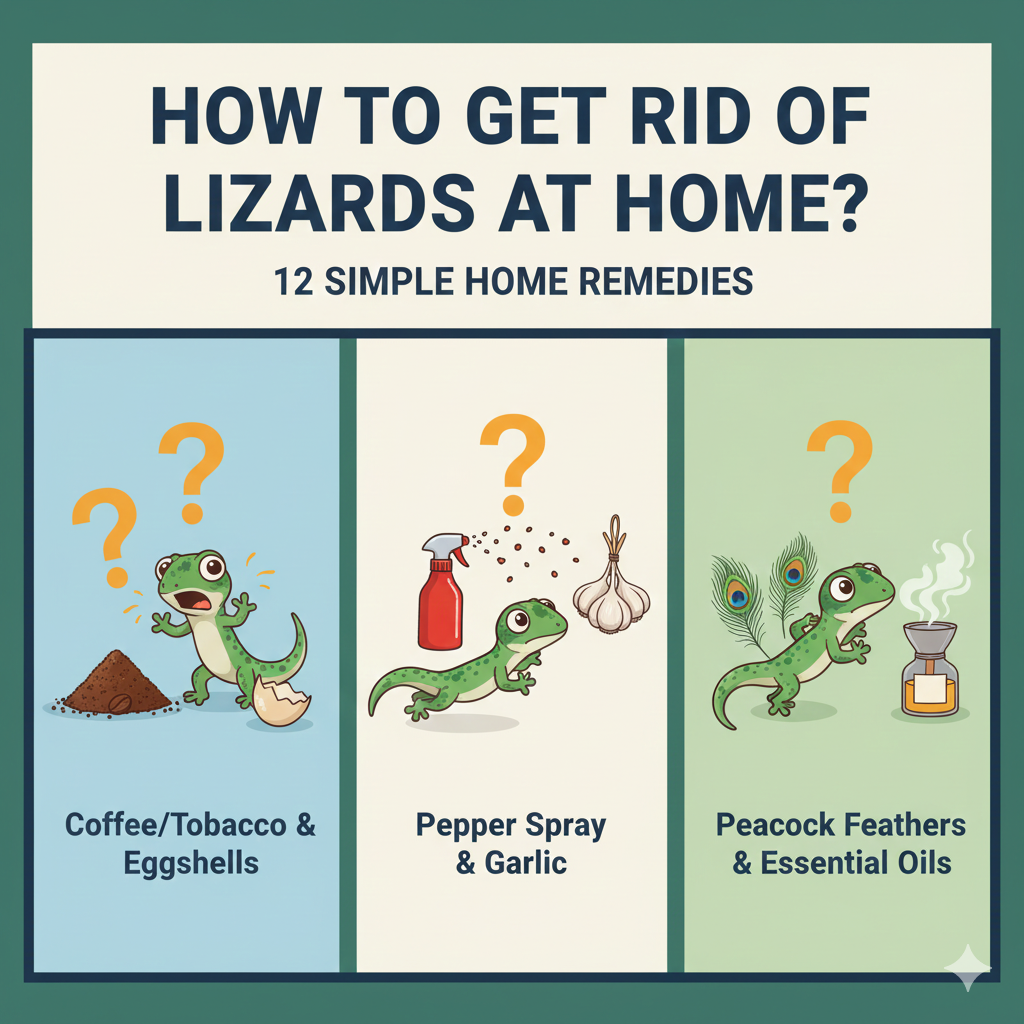
1. Coffee and Tobacco Balls: This might sound unusual, but it's a potent repellent. Mix coffee powder with tobacco powder and roll them into small balls. Place these balls in areas where lizards are frequently seen. The strong smell and bitter taste are highly off-putting.
2. Garlic and Onion: Lizards have a keen sense of smell, and they despise strong odors. Place crushed garlic cloves or onion slices near windows, doors, or cracks where lizards might enter. You can also make a spray by boiling garlic or onion in water and spraying it around.
3. Pepper Spray: Capsaicin, the compound that gives peppers their heat, is a powerful irritant for lizards. Mix black pepper powder with water and spray it directly on lizards or in areas they frequent. Be careful not to spray it on yourself or pets.
4. Cold Water: A sudden blast of cold water can temporarily stun a lizard, making it easier to catch and release outside. Keep a spray bottle filled with cold water handy.
5. Eggshells: Lizards perceive eggshells as a sign of predators (like birds) and will steer clear. Place half eggshells (after rinsing) in various corners of your home. Replace them every 3-4 weeks.
6. Naphthalene Balls (Mothballs): While effective, use naphthalene balls with caution as their fumes can be strong for humans and pets. Place them in attics, basements, or other less-frequented areas where lizards might hide.
7. Flypaper/Glue Traps: These are sticky traps designed for insects, but lizards can also get caught in them. Place them in strategic locations. If you catch a lizard, you can carefully release it outdoors with some vegetable oil.
8. Phenyl or Disinfectants: The strong smell of disinfectants like phenyl can deter lizards. Mop your floors with water mixed with phenyl, or dilute it and spray it in corners.
9. Essential Oils (Peppermint, Citronella): Many essential oils have strong scents that lizards dislike. Mix a few drops of peppermint or citronella oil with water and spray it around your home. You can also use diffusers.
10. Peacock Feathers: Peacocks are natural predators of lizards. Placing peacock feathers around your home, especially near entry points, can trick lizards into thinking a predator is nearby.
11. Keep Your Home Clean and Tidy: This is fundamental. Lizards thrive in environments with clutter and insect populations.
-
Eliminate Food Sources: Reduce insects by keeping your kitchen clean, storing food in airtight containers, and regularly emptying trash.
-
Declutter: Remove piles of newspapers, boxes, or laundry where lizards can hide.
-
Seal Entry Points: Inspect your home for cracks, gaps around windows and doors, and seal them with caulk or weatherstripping.
12. Introduce a Natural Predator (Cat): If you're a cat lover and don't already have one, a feline friend can be an excellent natural deterrent for lizards. Their hunting instincts often keep lizards at bay.
Prevention is Key!
Once you've managed to evict your unwelcome guests, focus on prevention to ensure they don't return.
-
Regularly clean and declutter your home.
-
Seal all potential entry points.
-
Control insect populations in and around your house.
-
Maintain your garden, trimming bushes and hedges away from your house.
By consistently applying these simple home remedies and preventative measures, you can create a lizard-free environment and enjoy your home in peace.
Frequently Asked Questions (FAQs) about Getting Rid of Lizards
Q1: Are lizards harmful to humans or pets? A1: Most common house lizards (geckos) are generally harmless to humans and pets. They are not venomous and typically won't bite unless provoked. They can, however, carry salmonella bacteria, so it's best to avoid direct contact and wash hands after touching surfaces they might have contaminated.
Q2: Why do I keep seeing lizards in my house? A2: Lizards usually enter homes in search of food (insects), shelter, warmth, or water. If you have a thriving insect population, open entry points, or clutter, your home becomes an attractive habitat for them.
Q3: Are these home remedies humane? A3: Yes, most of these remedies aim to deter lizards through strong smells or irritants, encouraging them to leave naturally rather than harming them. For methods like cold water or glue traps, the intention is to allow for safe capture and release outside.
Q4: How long does it take for these remedies to work? A4: The effectiveness can vary. Some remedies, like strong smells, might show immediate results. However, consistent application and addressing the root causes (like sealing entry points and controlling insects) are crucial for long-term success. Give it a few days to a week for noticeable changes.
Q5: Can I use pesticides to kill lizards? A5: While some pesticides might be effective against lizards, it's generally not recommended for indoor use, especially if you have children or pets. Pesticides can be harmful and are often unnecessary as natural remedies are usually sufficient. Focus on deterrence and habitat control first.
Q6: What if I have a severe lizard infestation? A6: If you've tried multiple home remedies consistently and still face a severe lizard problem, it might be time to call a professional pest control service. They can identify entry points, address underlying issues, and offer more targeted solutions safely.
.webp)
.webp)
.webp)










.jpg)


.png)


.png)
















.webp)























.jpg)